A data centre ban is a taxi medallion for Big Tech
TL;DR [show]
On November 3, 2026, voters in 10 US states decided 41 local ballot measures on data centres and almost all of them went against development, while Texas elected a governor who had promised a ban on all data centre approvals. The common read is that voters punished Big Tech. The piece argues the instrument does the opposite: a moratorium on new capacity fixes supply at whatever is already permitted and connected, which turns every existing site into the equivalent of a New York taxi medallion, and the companies holding the most of them are the hyperscalers the vote was aimed at. Canada has run both instruments at once. Mississauga and Oakville froze new data centres for a year, leaving the ones already operating untouched; New Brunswick proposed instead that any new data centre must pay for the costs it creates and cannot raise electricity rates. A cap hands the incumbent a licence. A price leaves the door open.
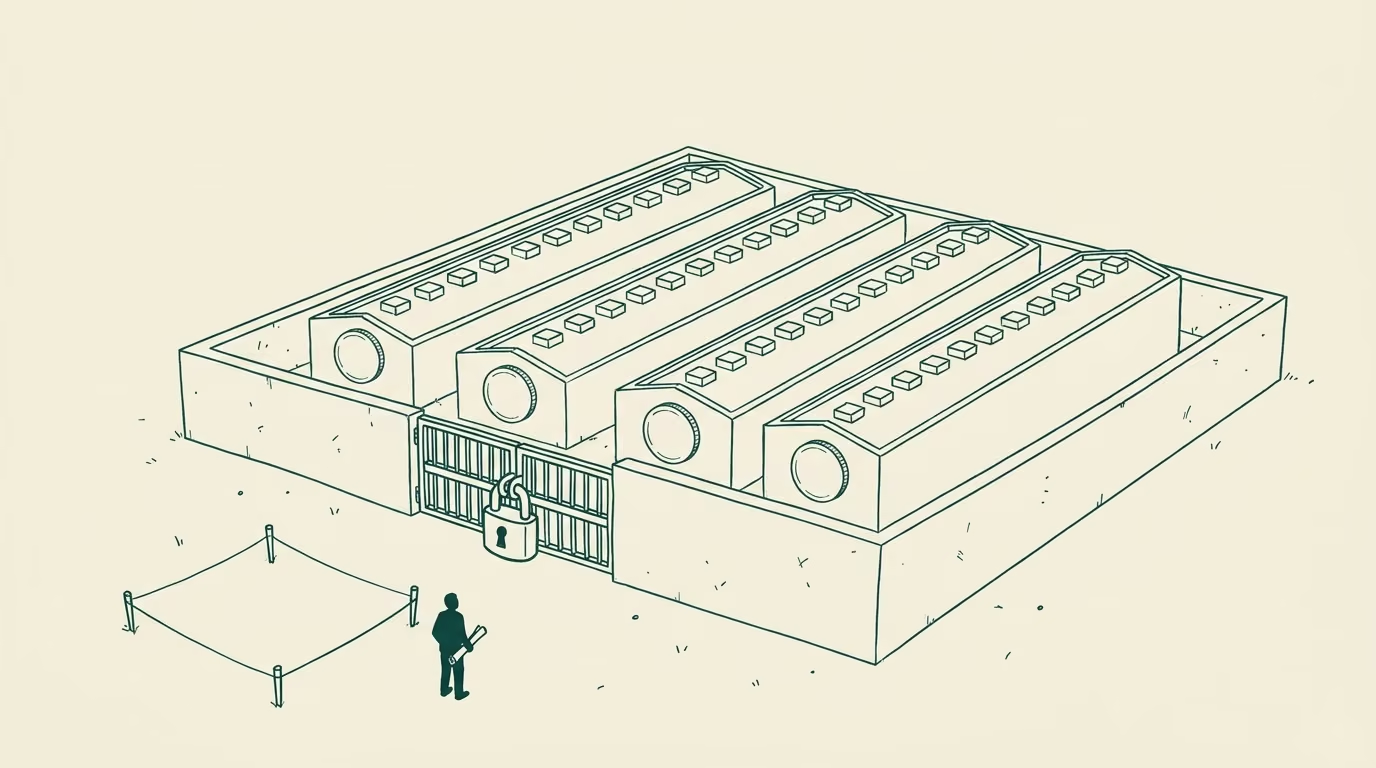
On September 16, Mississauga's city council voted, unanimously, to stop approving new data centres that draw more than 10 megawatts, for a year and possibly two. A 40-megawatt project Prologis had planned for the city's northwest went into limbo, and the company said it was considering its next steps. Several data centres already operate in Mississauga. The vote does not touch them.
Hold that picture, because the United States just drew it at scale. On November 3, voters in 10 states decided 41 local ballot measures on data centres, and the results, in one law firm's summary the next day, "almost unanimously skewed against data center development." Seventeen of the measures were bans, a dozen of them on anything above a size threshold. Texas elected Gina Hinojosa governor, who had promised a ban "on all data center approvals" until the legislature passes protections. Greg Abbott, the man she beat, had already frozen state environmental permits and grid connections for data centres in August, pending an audit.
The obvious read is that voters punished Big Tech. Ben Thompson's read was sharper: the hyperscalers, who already hold sites, come out ahead of the neoclouds, who need new ones. He is right about who wins. The reason is an instrument New York City wrote into law in the 1930s.
The city capped taxi licences at roughly the number of cabs already on the street, about 13,500. The cap did not make cabs rare. It made the right to run one rare, and that right belonged, from the first day, to whoever was already driving. The city grew for seventy years and the count barely moved. In 2011 two medallions sold for $1 million each. Nobody handed the owners a cheque. The cap was the cheque.
A moratorium does the same to a megawatt. Demand for compute did not vote on November 3. It still has to run somewhere, and the vote fixed the somewhere at whatever was already permitted, built or connected. Every one of those sites is now a medallion, worth more this month than last, because the next one cannot be issued. And the companies holding the most of them, by a distance, are the ones the voters were angry at. The developer with a term sheet and no site is the one the ban stops. The hyperscalers are not that developer.
This is about the oldest result in regulation, and it never seems to reach the ballot. Lock the door, and the room belongs to whoever is already inside.
Canada happens to be running both instruments at once. Ontario's towns chose the lock. Oakville passed a one-year interim control by-law on August 11, unanimously, with no formal application in front of it, days after land records showed a subsidiary of Hive, which builds AI data centres, had bought property in town. The first company a freeze catches is the one that just arrived. Mississauga followed. Hamilton, Burlington and Milton voted similar freezes down.
New Brunswick, where NB Power is fielding 10 applications that would need up to 900 megawatts, proposed the other instrument. Its framework says any new data centre "must pay for the costs it creates" and "cannot lead to higher electricity rates for New Brunswickers." That is a price. A price has no opinion about who arrived first. A newcomer who can meet it gets in, and the incumbent collects nothing from the door being shut, because the door is open. The framework is a proposal that closed to comment on October 2, not yet a law, and a price can be set so high that it works as a ban. But it is aimed at the cost a data centre imposes, not at how many there are.
The two instruments look alike from a town hall. Both are a council saying no to the next big building. They do opposite things to the companies already in town. A cap freezes the market and pays the holders a rent nobody voted for. A price keeps the market moving and lets anyone in who covers what they cost.
Hinojosa takes office on January 19. If she signs the ban she campaigned on, she will have done for Texas's existing data centres what 1930s New York did for its cab owners. Voters went to the polls to slow the giants down, and the instrument they chose hands the giants a licence nobody else can get.
—TJ