AI doesn't read your hotel brand. It reads your API.
TL;DR [show]
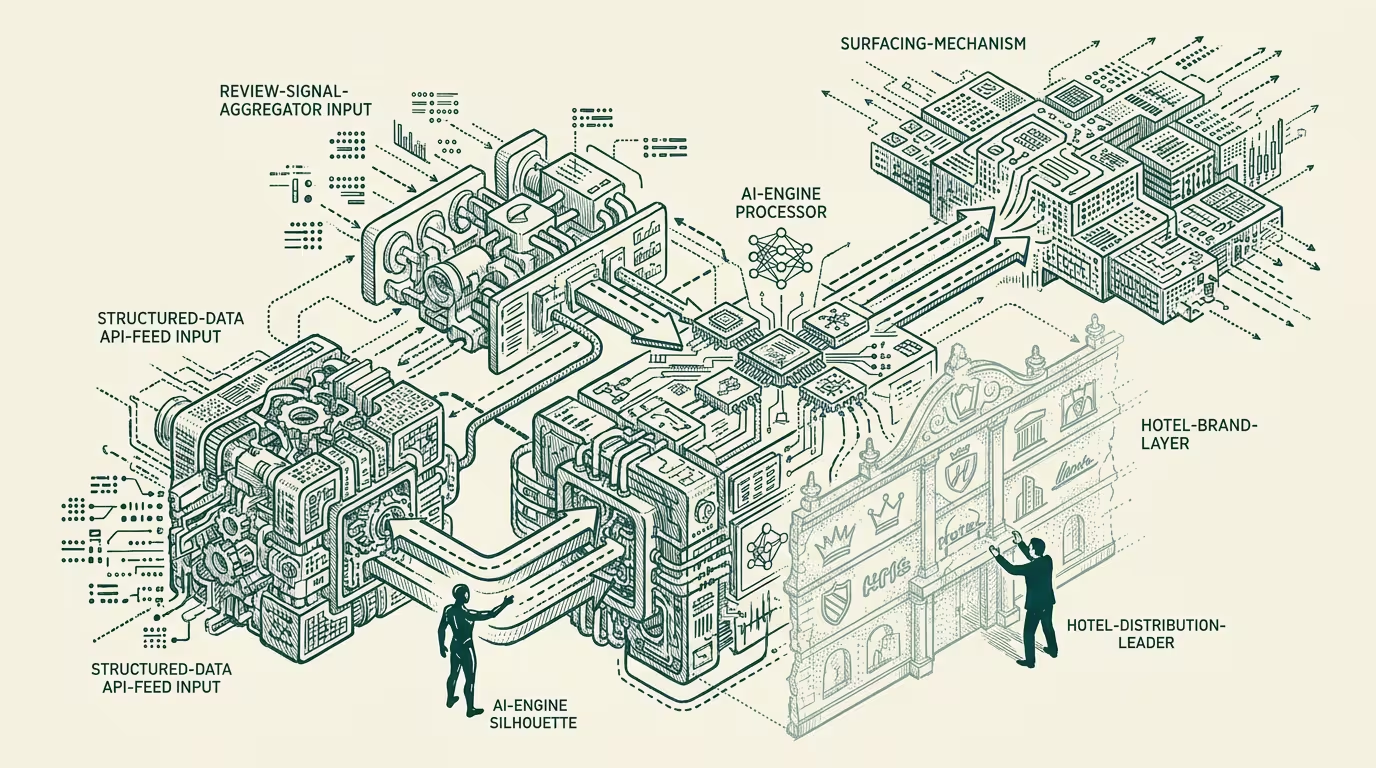
Hotel distribution leaders frame AI as the new gatekeeper, with trust replacing visibility as the surfacing mechanism, and signal 39's parallel framing folds into the same arc. The trust AI systems actually measure is structured data quality and review-signal consistency accessible via API, not the softer brand equity hotel marketing teams optimize for. Operators investing in data architecture win the AI-era visibility game; those investing in traditional brand marketing without API infrastructure become less visible as AI adoption increases.
Hotel distribution leaders through Q1 2026 framed AI as the new gatekeeper of consumer travel attention. Skift, HSMAI, and the trade-press class converged on the framing: trust is replacing visibility as the surfacing mechanism that decides which hotels get booked.
The framing is partially correct. The implementation guidance the trade press attached to it is mostly wrong.
AI doesn't read your hotel brand. It reads your API.
What does the AI actually measure when it measures "trust"? Structured data accessible via API. Review consistency across booking platforms, response-rate metadata on customer questions, photo-verification depth, listing-completeness scores, historical reliability metrics on inventory availability and pricing accuracy. Each is operator-class infrastructure work. None is brand marketing. The hotel that has invested in data architecture, review-signal consistency, and API metadata depth is the hotel whose AI-mediated visibility scores high. The hotel that has invested in traditional brand marketing without the underlying API infrastructure is the hotel whose AI-mediated visibility compresses as AI adoption increases.
How does this differ from what marketing teams have been optimizing for? Marketing teams optimize for narrative trust (brand promise, lifestyle alignment, emotional positioning). AI booking systems optimize for operational trust (data quality, signal consistency, reliability metrics). The two are correlated but distinct. The hotel whose narrative trust is high but whose operational trust is low (poor review-response rates, inconsistent listings across booking platforms, stale metadata) is the hotel whose AI-mediated visibility lags its brand-marketing visibility. The gap is invisible to the marketing class and operationally costly to the visibility outcome.
What's shifting in operator-tier budget allocation? Hotels in the AI-era category-leadership window are reallocating capital from traditional advertising channels (display advertising, OTA paid placement, brand-class campaigns) toward API infrastructure, review-management platforms, content-management systems with multi-platform distribution, and data-quality monitoring. The reallocation is operationally significant and structurally durable. By 2027-2028 the data-architecture investment becomes table stakes; hotels that didn't make the reallocation in 2025-2026 absorb visibility compression they can't reverse without playing catchup.
Where does the reframing apply beyond hotels? Every consumer category where AI mediates discovery. Restaurants (the AI reads OpenTable / Resy / Google data, not your Instagram). Retailers (the AI reads Shopify / inventory / review data, not your billboard). Service businesses (the AI reads Google Business / Yelp data, not your radio ad). Each category has its own version of the API-not-brand reframing. The operator who reads the reframing as universal is calibrated to the AI-mediated discovery shift across multiple categories simultaneously.
What survives all of this is that hotel distribution AI is one of the clearer 2026 examples of the API-not-brand operator-level shift, the trust AI measures is operational rather than narrative, and the budget reallocation from brand-marketing to data-architecture is structurally durable. Hotels that recognize the shift compete in the AI-mediated visibility game. Hotels that continue to invest in brand-marketing without API infrastructure compete for a discovery surface that's compressing as a fraction of consumer travel attention.
AI doesn't read your hotel brand. It reads your API. The reframing is operationally simple. The implementation work is operator. The hotels investing in the right layer win the AI-era visibility competition; the hotels investing in the wrong layer absorb the compression.
—TJ