AI slop is in your procurement pipeline. Audit before you debate.
TL;DR [show]
Simon Willison popularized 'slop' for unwanted AI content (May 2024); through 2024-2025 Facebook AI floods, Google AI Overview hallucinations, and rising LLM-generated web content drove the discourse. Operator read: by the time slop is a public-discourse story, it's already in your procurement pipeline — the marketing copy your vendor delivered, the support transcripts your team trains on, the review data your product reads. Audit the inputs first; the output debate comes later.
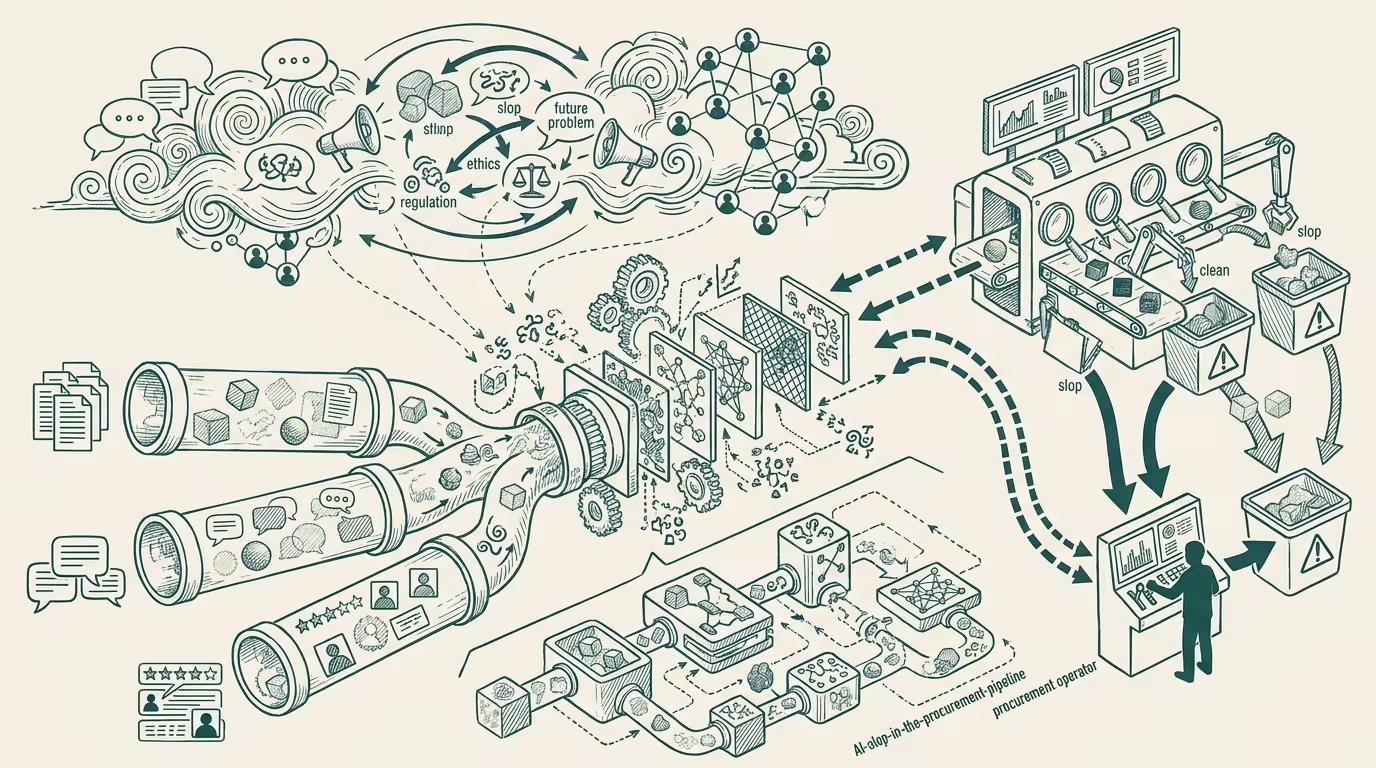
Simon Willison popularized "slop" in May 2024 as the term for unwanted AI-generated content. Through 2024 and 2025 the discourse compounded — Facebook AI-image floods, Google AI Overview hallucinations citing fabricated sources, LLM-generated SEO content displacing human-written reference material, comment-section bots running coordinated campaigns at scale. By Q4 2024 the term was tradepress regular. By 2025 it was a public-discourse story.
The structural implication is that the public-discourse arrival is the lagging indicator. By the time slop is a discourse story, it is already in the operator's procurement pipeline.
The supply-chain side is where it bites. Marketing copy comes through content vendors whose pre-2024 QA assumption was human-written and whose post-2024 reality is contamination the procurement team did not specify. Customer-service transcripts ingested for response-template training carry AI-content from the customer side (AI-drafted customer messages, chatbot-aggregated escalations) into next-cycle outputs as a recursion the operator-class has not measured. Product-review data, third-party-research data, and market-intelligence data each include AI-generated content at non-trivial rates, calibrating operator decisions to a content-source distribution nobody picked.
The procurement-class read is the operator-tier response. Operators trying to buy a "detect AI content" tool to fix the problem are paying for a vendor-class commodity that does not solve the procurement-class problem. The fix is contract language specifying source, verification mechanism, and audit rights. That is operator work, not vendor-class work, and the procurement team has to do it.
The cross-category implication is that the public-discourse story is the lagging indicator across every AI-content category. By the time hallucination is a discourse story, it is in your search-engine-result data. By the time deep-fakes are a discourse story, they are in your fraud-detection inputs. By the time AI-tutoring is a discourse story, it is in your education-vendor deliverables. The pattern recurs. The operator-grade discipline is to audit the input categories that the discourse is signaling, ahead of the discourse-arrival lag.
The read that survives is that slop is a real category, the public-discourse arrival is a lagging indicator of procurement-pipeline contamination, and the audit-before-debate sequencing is the operator discipline. Without the audit, the output debate is operating-uninformed — the company is debating whether to commission AI content while AI content is already in the supply chain at volumes nobody measured. With the audit, the debate has its operating-relevant input.
Audit before you debate. Most operators are debating. The audit is the work the debate is skipping.
—TJ