The mall is dead. Long live the ... airport?
TL;DR [show]
Airport concession spend per passenger has been climbing since 2018 while mall sales-per-visit have been falling, and by 2025 the per-capita gap is wide enough that the same restaurant categories now invest in airport terminals first and the suburban mall second. The interesting story is operator-side: a small number of airport F&B operators now control most of the experience, and their incentive structure produces a different category of food-and-retail than the mall ever did. Five operators, five-figure per-square-foot rent norms, and a closing argument about why airport authorities are the most under-discussed real-estate landlords in the US.
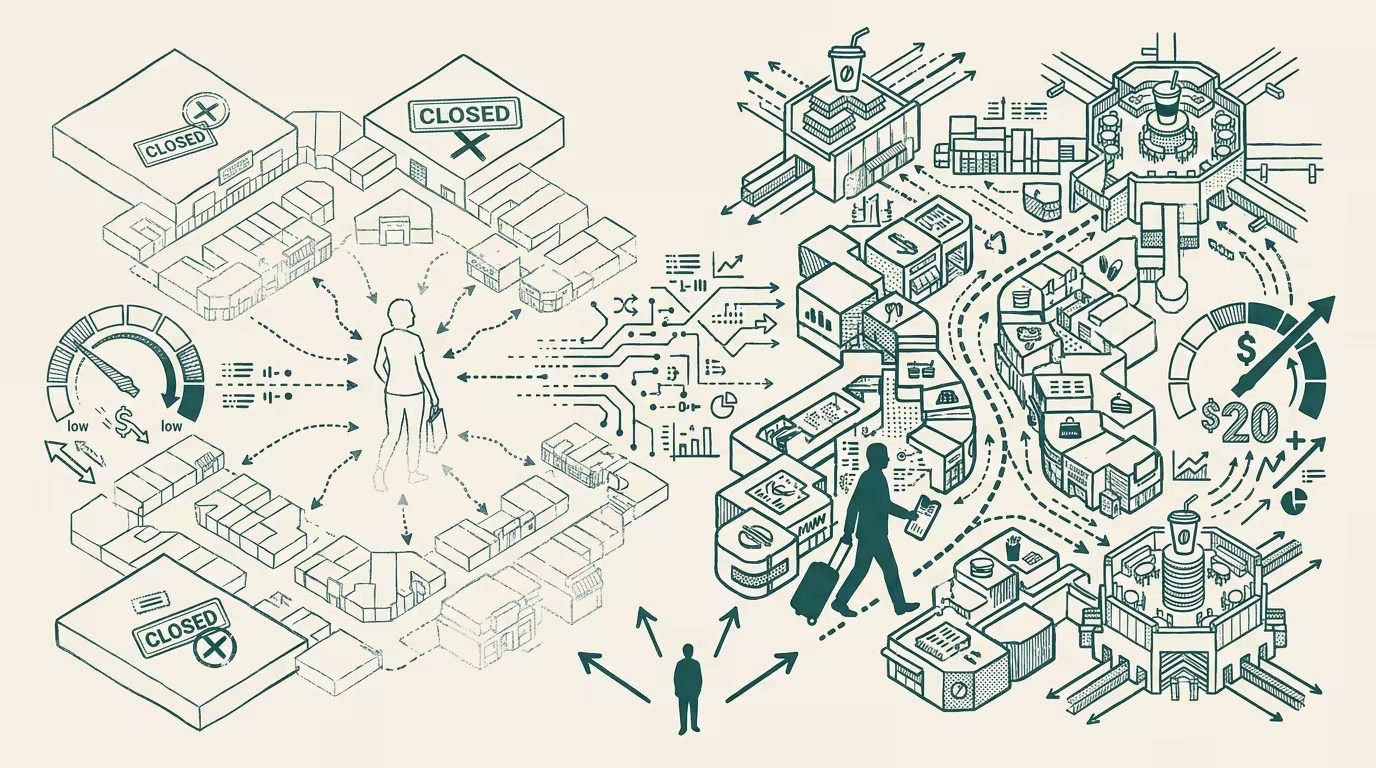
The airport replaced the mall as the dominant US captive-retail surface somewhere between 2019 and 2024, and almost no one named the moment. Per-passenger concession spend at major US hubs climbed past $20 in the most recent ACI North America benchmarks. Per-visit mall spend fell below it. The crossover is real, the operating consequence is that the restaurant brands that used to anchor mall food courts are now signing terminal leases first and treating the suburban mall as a secondary surface, when they treat it at all. Nobody wrote a press release about it. Of course not. The mall is, by definition, the venue that wins press releases.
I have been buying coffee at gate B14 in Atlanta for the better part of a decade, and the thing I did not realize until 2024 is that the company I was buying it from had been the same company the whole time. I had been treating the airport like a collection of restaurants. The airport, since at least 2018, had been treating itself like a single five-tenant building with a captive audience and an iPad ordering system. We were not in the same conversation.
On the operator side, the consolidation has been quiet enough that most travelers still believe they are walking past a normal restaurant when they buy a Cuban sandwich at gate B14. They are not. They are buying from one of five operators who treat airport terminals as a different real-estate category from the rest of the food-service industry, and the differences shape what the experience looks like.
HMSHost. The Autogrill subsidiary, recently sold to Apollo Global Management in a transaction that reset the valuation of the entire US airport-F&B category. HMSHost runs the largest portfolio of airport food locations in the country: the Cibo Express grab-and-go chain, the airport versions of Starbucks, and a long tail of franchised regional brands operated under master-license agreements. The model is built around a small number of high-volume locations per terminal anchored by national brands. The operating thesis is that travelers want recognizability under stress more than they want novelty — which, of course, was also the thesis the mall food court ran on for forty years before the rent broke. The Apollo deal valued the US business at a multiple that suggests the buyer thinks the next forty years play differently.
OTG Management. The New York-based operator that runs the iPad-tabletop ordering system across most of JFK Terminal 4, LaGuardia Terminal B and C, and Newark Terminal A. OTG's model is the inverse of HMSHost's: fewer national franchises, more locally-named restaurants with tasting-menu pretensions, every order placed through an iPad mounted to the table. The economic logic is that the iPad ordering system harvests data the operator can sell to airline-loyalty programs, and the data revenue offsets the per-cover food margin in a way that lets them charge $24 for a salad without losing the airline's bid for the terminal contract. The salad is, of course, fine.
Areas USA. The American arm of the Spanish operator Areas, historically a European-airport company that took serious US share through targeted bids on second-tier hubs. Their portfolio is heavier on regional-airport contracts and on highway-service-plaza concessions in the Northeast Corridor. Areas runs cleaner, smaller-format restaurants. The operating thesis is that the second-tier airport experience can be elevated meaningfully without forcing the OTG iPad-architecture cost structure on a market that does not need it. Translation: the iPad pays for itself only in markets that can absorb the $24 salad, and most of America cannot.
SSP America. The US subsidiary of UK-listed SSP Group, $1B+ US annual revenue, focused on a third operating thesis: pure local-restaurant licensing. SSP's signature deals are with restaurant brands that have a single Michelin star or a regional cult following and are willing to license their name and recipes to a terminal location SSP operates. The customer thinks they are eating at a transplanted Cochon Butcher. The actual operator is SSP, the recipes are calibrated for the airport supply chain, and the brand is paid a license fee that requires no operational overhead from them. The model works because flag-bearing local brands are willing to do the deal and travelers are willing to believe the airport version is meaningfully connected to the original. Both halves of that sentence are doing work.
Paradies Lagardère. The fifth operator runs more newsstand-and-retail than F&B, with a meaningful F&B portfolio in tier-two airports. The distinguishing move is hybrid format: a typical Paradies Lagardère footprint pairs a news-and-snacks retail store with a quick-service restaurant under joint operation, sharing labor and inventory. The hybrid format is meaningfully more profitable per square foot than either pure-retail or pure-F&B at the airport rent levels these operators are paying — between $80 and $300 per square foot annually depending on the terminal and the location.
About those rent numbers. Suburban-mall rent for an inline F&B location is in the $30-50 per square foot range. Airport rent for an equivalent footprint is three to ten times that. The math the operators are running says the airport rent is justifiable only if the per-cover spend is substantially higher than mall food court, the throughput is higher per operating hour, or the data revenue is large enough to subsidize the food margin. All three are true in the right combinations. The mall food court has none of them. The mall food court is, by this math, a category that should not exist, and increasingly does not.
Real-estate framing is the one that travels. Airport authorities are the most under-discussed institutional landlords in the US: they own the most expensive captive-retail real estate in the country, they collect the rent, they bid out the contracts every five to seven years, and the contract awards are frequently the largest single business decision a regional airport authority will make in a given year. The airport F&B contract is a piece of municipal infrastructure-finance that gets less attention than the runway expansion or the parking garage, despite generating revenue at a higher rate than either. The local newspaper covers the runway. Nobody covers the contract. The reporters do not know it exists. Half the time, neither do the airport authority's own elected commissioners.
The mall, meanwhile, has been losing the spend it used to carry. Simon Property Group, Macerich, and Brookfield have all pivoted toward entertainment-and-experience anchors, food-hall conversions of dead anchor stores, and outdoor-format mixed-use redevelopment. None of those moves are wrong. They are also not winning back the dwell-time spend the airports captured. The mall pivot is to a smaller business that breaks even at a lower revenue point. The airport business is a larger captive-spend surface that the operators have not yet figured out how to price at maximum extraction. Two trajectories crossing in plain sight, and the public-policy conversation is still anchored on the suburb.
The implication for the next decade is that the airport authority is the property the regional development-finance discussion should center on. Most regional economic-development conversations about retail real estate are still anchored on mall-site redevelopment, on the dead-anchor problem, on the public-financing gap. The conversation that should be happening is about the airport authority's concession agreement: who is bidding, what are they paying, what is the data-rights side of the contract, and what does the airport authority do with the rent. That conversation is happening in the trade press and inside the airport authorities themselves. The conversation that gets the policy attention is about the empty Macy's at the dead mall.
I keep watching this and thinking the same thing. The mall is dead. The airport is where the next mall was already built, while the public-policy conversation was still arguing about the suburb, and the five operators who figured this out before the rest of us are, of course, in no hurry to correct the misperception.
—TJ