Apple used to answer copycats with a better product. Now it answers with a lawsuit.
TL;DR [show]
Apple's July 2026 trade-secret suit against OpenAI cites 400+ ex-Apple hires, names its former hardware chief, and follows OpenAI buying Jony Ive's IO outright. The piece concedes the case is probably meritorious and that litigation is the rational move once California's no-non-compete regime frees the talent. Then it takes the harder stance: the lawsuit is a tell. The old Apple answered copycats by shipping something they could not, and reaching for the courtroom instead of the lab is what a company does when it has lost confidence it can still out-build the field. Winning in court is not winning in the market, and the Apple that shipped the iPhone knew the difference. An affectionate-disappointment read on a smaller, more defensive Apple.
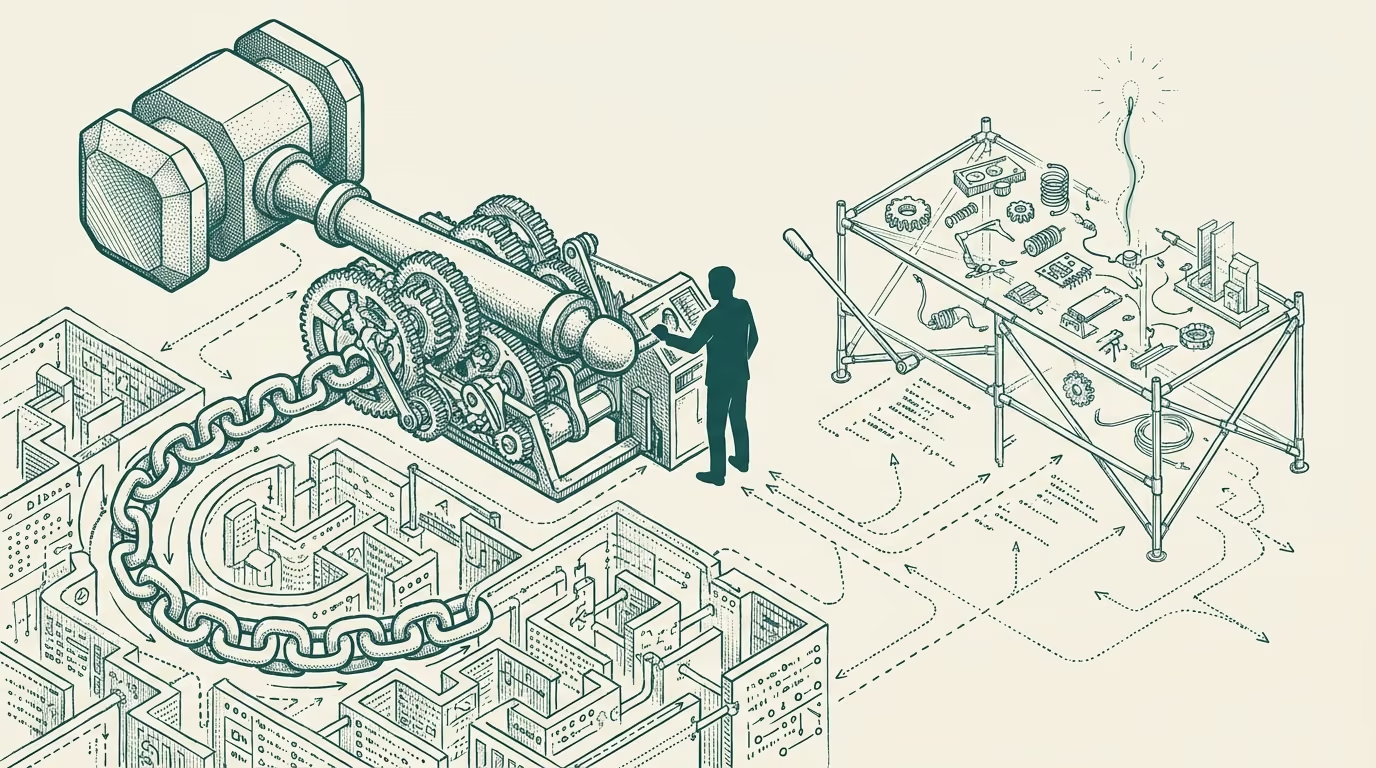
Apple and OpenAI spent 2024 as partners. ChatGPT shipped inside iOS, the keynote called it a milestone, and for a season the two of them looked like the alliance that would define the phone-meets-model era. On July 10 Apple sued them.
The complaint, filed in the Northern District of California, accuses OpenAI of stealing hardware trade secrets. The number carrying the filing is four hundred, roughly how many former Apple employees it says now sit inside OpenAI, and it names the biggest of them: Tang Tan, the hardware chief who left Apple and resurfaced building devices at the company Apple used to demo on its own stage. The whole thing is knotted up with Jony Ive, whose IO hardware startup OpenAI bought outright. Which is to say OpenAI did not merely hire Apple's people. It bought the room they were assembling in.
Here is the part I have to concede first, because leaving it out would be cheating. Apple is probably not wrong.
Hardware does not leak on a thumb drive. It leaves through people. A senior engineer carries the tacit stuff no document captures: which sensor tolerances actually hold, which supplier finally said yes, which three approaches the last company already burned two years proving were dead ends. Hire four hundred of them and you have relocated a real slice of a hardware program without copying a single file. The people are the file. Buy the shop they were building in and you have taken the workbench too. If that is what happened, this is not a nuisance suit. It is a plausible, maybe provable, theft, and Apple has every right to be furious about it.
Grant Apple the logic, too, because the move is rational on its own terms. California voids non-competes. Section 16600 of the Business and Professions Code, the rule most people credit for the Valley existing at all, means an engineer can walk out of Apple on Friday and into OpenAI on Monday with everything in their head, lawfully, and nothing Apple writes into a contract can stop it. Take the non-compete off the table and one lever is left for a company whose program just moved across town: you sue over what walked out inside people's skulls. Trade-secret litigation ends up doing the job the non-compete is no longer allowed to do. Given the board Apple is playing on, filing is the correct move. I would probably file it too.
And that is exactly what bothers me.
Because there was another Apple, and it is not ancient history. That Apple answered the companies that copied it the way it answered everyone. It shipped something they could not. The iPod got cloned into oblivion and Apple shipped the iPhone. The knockoffs were real and the poaching was real and the response was almost never a press release about a lawsuit. It was a better product, on a stage, that made the copy look like exactly what it was. Litigation existed, Apple used it, but it was the footnote under the launch. The product was the answer.
The Apple suing OpenAI is answering a poach with a filing. Read it as a tell. When you have lost four hundred people and your former hardware chief to the company most likely to build the device that eats your own, there are two ways to respond. Out-build them, or out-last them in court. The old Apple reached for the first because it never seriously doubted it could. Reaching for the second is what a company does when it is no longer certain of that.
I have sat in the version of this room where you decide which lever to pull after a rival hires away your best people, and the lawsuit is always the tempting one. It is fast. It feels like control. It does not require you to have the better idea ready on Monday. The build is slow, it can fail in public, and it demands that you still have the thing that made you dangerous in the first place. Choosing the courtroom over the lab is choosing the lever that never asks whether you can still win on the merits. That is a defensive posture, and defense is a strange stance for the most valuable company on earth to take toward a five-year-old lab.
There is a colder reading available, and it makes the choice look shrewd instead of sad. A trade-secret case is discovery, expert witnesses, injunction fights, years of it and tens of millions in spend before anyone gets near a verdict. Apple can write that check without feeling it. A young company that just hired a brilliant team cannot. It does not even need to lose. It needs the case to be credible enough that the next raise gets harder, the next senior hire hesitates, and an injunction risk hangs over every product decision for two years. As a weapon the suit works whether or not it ever reaches a jury. So maybe this is not decline. Maybe it is Apple spending the one advantage a trillion-dollar balance sheet still buys once the talent has gone liquid.
I do not think that is the flattering story it sounds like. A moat you buy from a law firm is one that every other giant can buy too, which makes it a toll, not a wall. It is the least Apple-specific thing a company can do with its money. The iPhone was not available to anyone who could afford it. That was the entire point of it. The thing that used to separate Apple from the field was that it could build what the field could not, and a courtroom advantage runs through the legal department, where nothing about you is rare.
What leaked out of Apple with those four hundred people may not be the trade secrets at all. It may be the confidence. A company sure of its next product does not spend the summer in the Northern District of California. It spends the summer in the lab, quietly, letting a rival hire whoever it wants because it already knows what it is going to put on a stage in eighteen months. The lawsuit is Apple telling the market, in the one venue where it cannot control the framing, that it is no longer sure what it is putting on that stage. That is a larger admission than anything in the complaint, and Apple filed it voluntarily.
None of this turns on whether Apple wins. Litigation is slow, and by the time this one resolves the hardware at issue may be two generations obsolete. Apple could win every count and it would not touch the question the suit quietly raises, which is whether the company still believes it can out-build the people who left. Winning in court and winning in the market were never the same thing, and the Apple that shipped the iPhone knew the difference cold.
So the problem is not that Apple sued. The suit may be righteous, and it may even be smart. The problem is that suing was the answer at all, that the first public move was the filing and not the phone. The Apple I admired would have let the copycats copy and shipped the thing that made them look small for doing it. I keep waiting for that Apple to turn up to its own lawsuit. So far it has sent attorneys.
—TJ