On the morning routine I stopped having.
TL;DR [show]
A short personal-register list-breakdown on the morning routine that compounded for some years and then stopped compounding, and the post-routine pattern that emerged. Observational register only. Names the pattern, not the moment. Operator-as-person register.
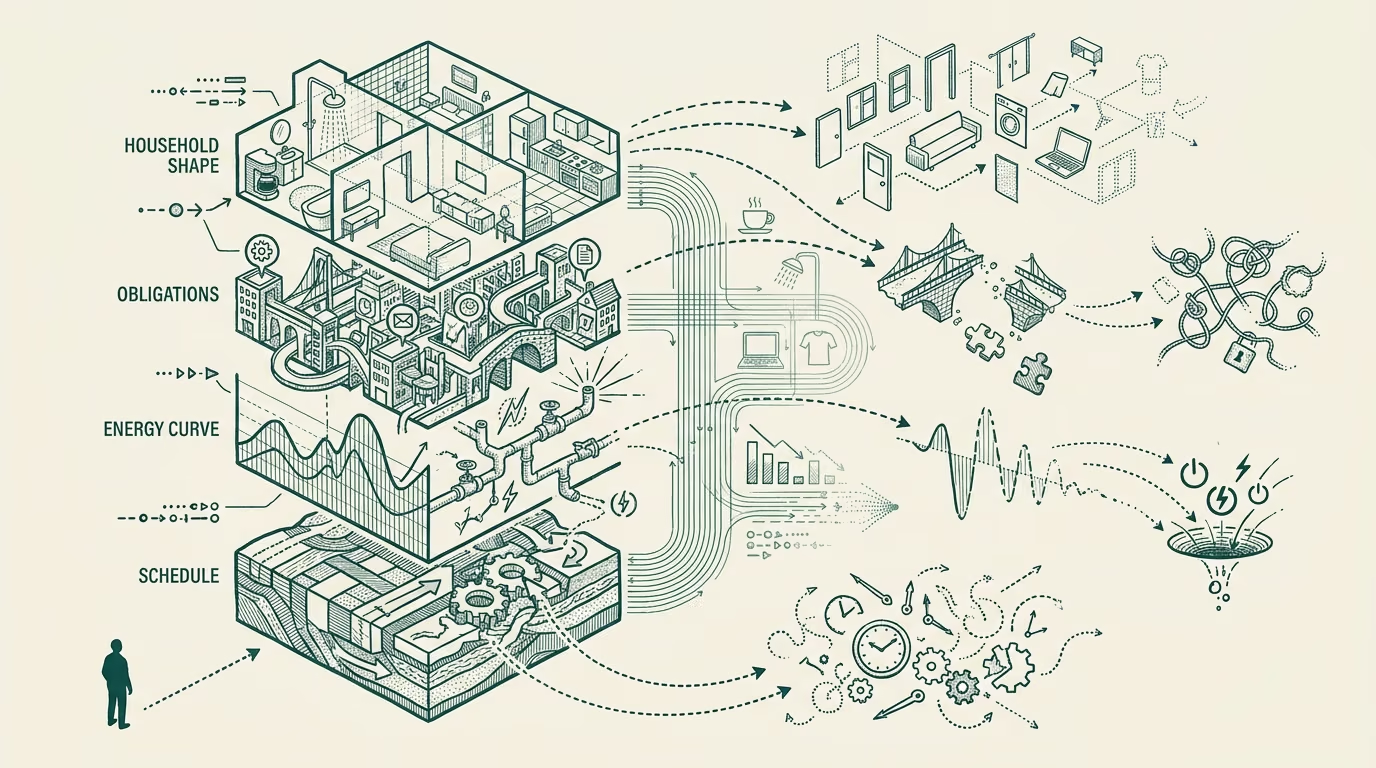
There is a kind of morning routine that compounds for some number of years and then, quietly, stops compounding. I have noticed the pattern in myself and in the operators I know who have been running long enough to have had one and to have watched it end. A few observations on the shape of it. I am not going to name the routine specifically because the specifics are less interesting than the shape, and naming them invites a kind of false-precision the pattern does not actually carry.
The routine works because the operator is the person the routine fits. Whatever the routine is, it works for some years because the person who built it built it around the constraints they had at that time. The schedule, the energy curve, the obligations, the household shape, the work pattern. The routine is calibrated. The calibration is what produces the compounding effect. The routine is not the cause; the calibration is.
The constraints change before the routine does. The schedule shifts, the energy curve shifts, the household shape changes, the work pattern changes. The routine, which was calibrated against the prior constraints, persists for some additional months on inertia because the operator is committed to it and because changing it feels like loss. The routine starts producing slightly less of what it used to produce. The operator, used to the prior compounding, attributes the dip to a bad week or a slow stretch. The dip is not a bad week. The dip is the routine no longer fitting the constraints.
The operator notices the gap before naming it. There is some period, sometimes weeks and sometimes months, where the operator has noticed that the routine is not producing what it used to and has not yet named that the routine has stopped fitting. The naming is the harder step. The routine carries a lot of identity, especially for operators who built it deliberately and watched it work for a long time. Naming that it has stopped fitting requires giving up the version of the operator that the routine produced.
The post-routine period is unstructured and slightly uncomfortable. Once the routine is named as no longer fitting, the operator has to either build a new one or run unstructured for a while. The unstructured stretch is uncomfortable because the operator is used to the structure that the routine provided, and the absence of structure feels like drift. The drift is not drift. The drift is recalibration. The operator does not always know that until later.
Something else emerges, slower than the prior routine and shaped differently. What replaces the prior routine is generally not a new routine on the same shape. It is a different kind of pattern, sometimes much looser, sometimes structured around different anchors than the prior one used. The new pattern does not produce the same kind of compounding the prior one produced. It produces a different kind, calibrated to the constraints the operator now has. The new pattern is right for the operator that exists now, not for the operator the prior routine produced.
The pattern is general enough that I think a lot of operators have run it. The trade press writes about morning routines as if the routine were the thing. The routine is not the thing. The calibration between the routine and the operator's constraints is the thing, and the calibration has a shelf life that varies by life-stage and is generally measured in years.
I miss the version of the routine that worked. The version that worked was for the operator I was at the time it was working. The operator I am now is operating at the post-routine pattern. Both are real. Both produced what they produced.
That is the whole observation.
—TJ