Newsom vetoed SB 1047. California AI regulation will return and it will look different when it does.
TL;DR [show]
California Governor Gavin Newsom vetoed SB 1047 on September 29, 2024. The bill had been the most consequential AI-safety legislation of the year before it was struck down under industry-class opposition. AB 2013 and SB 1120 were signed in the same window, addressing narrower aspects of AI regulation. The veto was framed as the end of California AI regulation by some commentary; the structural read is the opposite. The veto deferred comprehensive AI regulation to a more targeted form, and the successor legislation that has emerged through 2025 confirms the read.
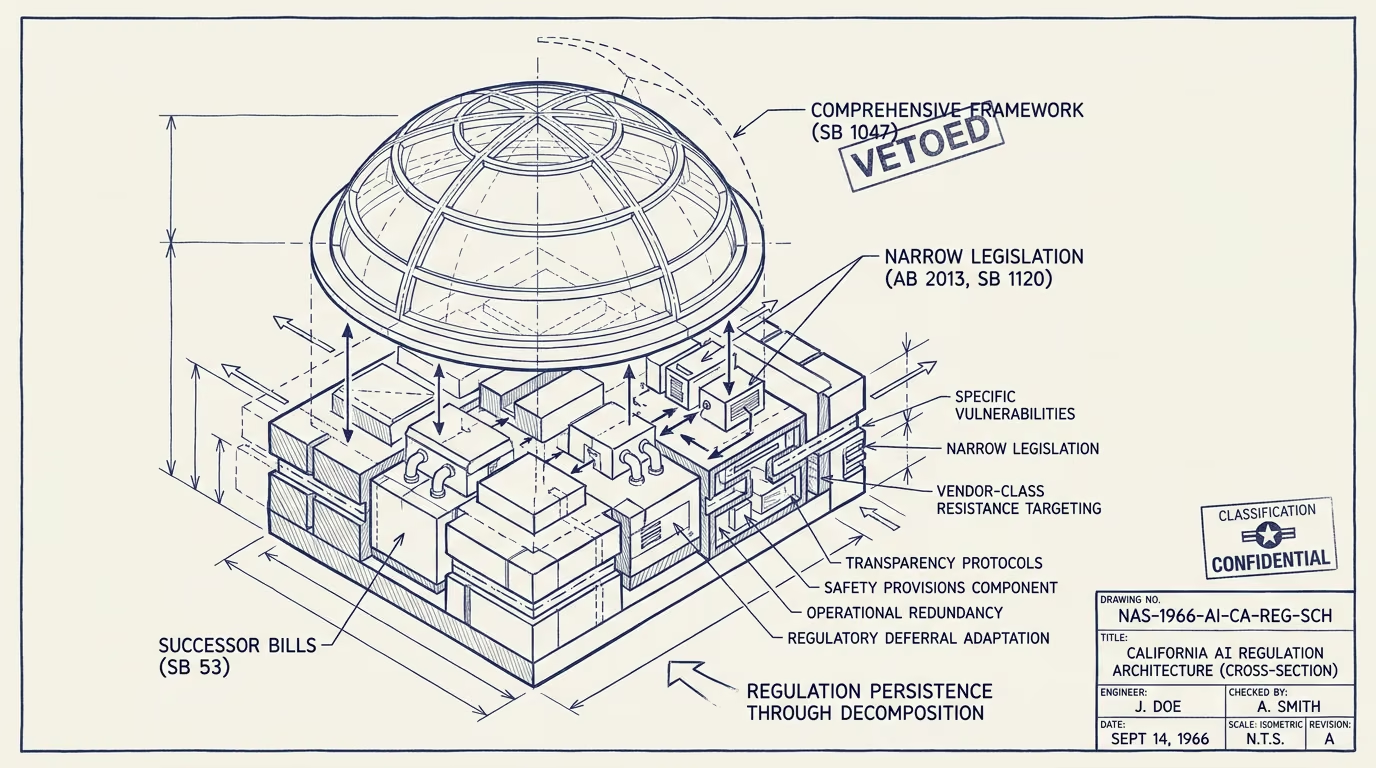
California Governor Gavin Newsom vetoed Senate Bill 1047 on September 29, 2024. SB 1047 had been the most consequential AI-safety legislation under consideration in any U.S. jurisdiction, with provisions covering large-frontier-model training, safety-and-evaluation requirements, and a regulatory-and-liability framework that the AI-vendor class had been substantially organizing against. The veto was the immediate consequence of the industry-class opposition combined with the governor's articulated concerns about the bill's scope-and-targeting framing.
The trade-press coverage of the veto split into two interpretations. The deregulatory-leaning interpretation framed the veto as the end of California AI regulation, with the consequence that the broader U.S. regulatory environment would remain light-touch. The safety-leaning interpretation framed the veto as a setback for the AI-safety policy agenda, with the consequence that future legislation would face higher political-class barriers.
Both interpretations are wrong on the structural read. The veto did not end California AI regulation. The veto deferred comprehensive AI regulation to a more targeted form. The successor legislation that emerged through 2025, including SB 53 and adjacent bills, confirms the deferred-and-redirected pattern.
Three observations follow from the post-veto trajectory.
The first is that AB 2013 and SB 1120, signed in the same Sept-Oct 2024 window as the SB 1047 veto, addressed narrower aspects of AI regulation (training-data transparency, healthcare-AI utilization-management) that the broader SB 1047 framing had partially absorbed. The narrower bills are the first signal that the regulatory agenda continues despite the headline veto, with the legislation moving to more-targeted bills rather than to comprehensive frameworks.
The second is that the political-class learning from the SB 1047 process produced more-sophisticated subsequent bills. The SB 53 framing addresses the specific concerns Newsom articulated in the veto message (bill-scope concerns, industry-class concerns about training-class regulation, the overall liability framework), while preserving the safety-and-evaluation infrastructure the original bill was meant to produce. The successor framing is structurally more durable because it engages with the political-class critique directly.
The third is that the broader pattern of state-level AI regulation generalizes. Comprehensive bills (SB 1047, the Texas comprehensive proposals, the Connecticut early-cycle bills) face industry-class opposition that produces vetoes or substantial amendments. Narrower targeted bills (Colorado SB 205, Illinois WOPR-class legislation, MHMDA-class privacy legislation) move through the legislative process with substantially less friction. The political-class trajectory converges on the targeted-bill pattern, with the comprehensive-framework legislation being deferred to a future political-environment that may or may not produce it.
For operators reading the California regulatory environment through 2024-2027, the practical advice is to plan against the targeted-legislation pattern rather than against either the deregulatory-framing or the comprehensive-regulation-framing. Targeted bills will continue to produce specific compliance requirements in specific categories. The state-level patchwork will continue to grow. The federal-level pre-emption is unlikely on the relevant timeline.
The Newsom veto was the visible inflection. The targeted-bill pattern is the durable trajectory. SB 53 and adjacent legislation confirm the trajectory through 2025. Operators positioning against the deregulatory-framing or the comprehensive-regulation-framing miss the actual structural feature, which is in the middle: targeted bills, growing patchwork, no near-term federal pre-emption. Build accordingly.
—TJ
Related
- Oct 15, 2025 · AICalifornia AB 1018 is the automated-decisions safety act the hiring-AI vendors didn't see coming.
- Feb 24, 2025 · HealthcareThe first MHMDA private lawsuit names Amazon. The health-data-as-product model just got litigated.
- Jun 12, 2024 · AIColorado passed the first comprehensive US state AI law. Operators in travel and health need to read it.