Opus 4.7 ships with design. Your B2B moat just got reshaped.
TL;DR [show]
Claude Opus 4.7 (2026-04-17) shipped Claude Design — a collaborative design tool for visual outputs, prototypes, and slides. Operator read: when the frontier model becomes the design collaborator, the moat question for every B2B SaaS is whether the workflow they sell survives the model becoming a design partner. Three categories where the answer is yes, three where it is no.
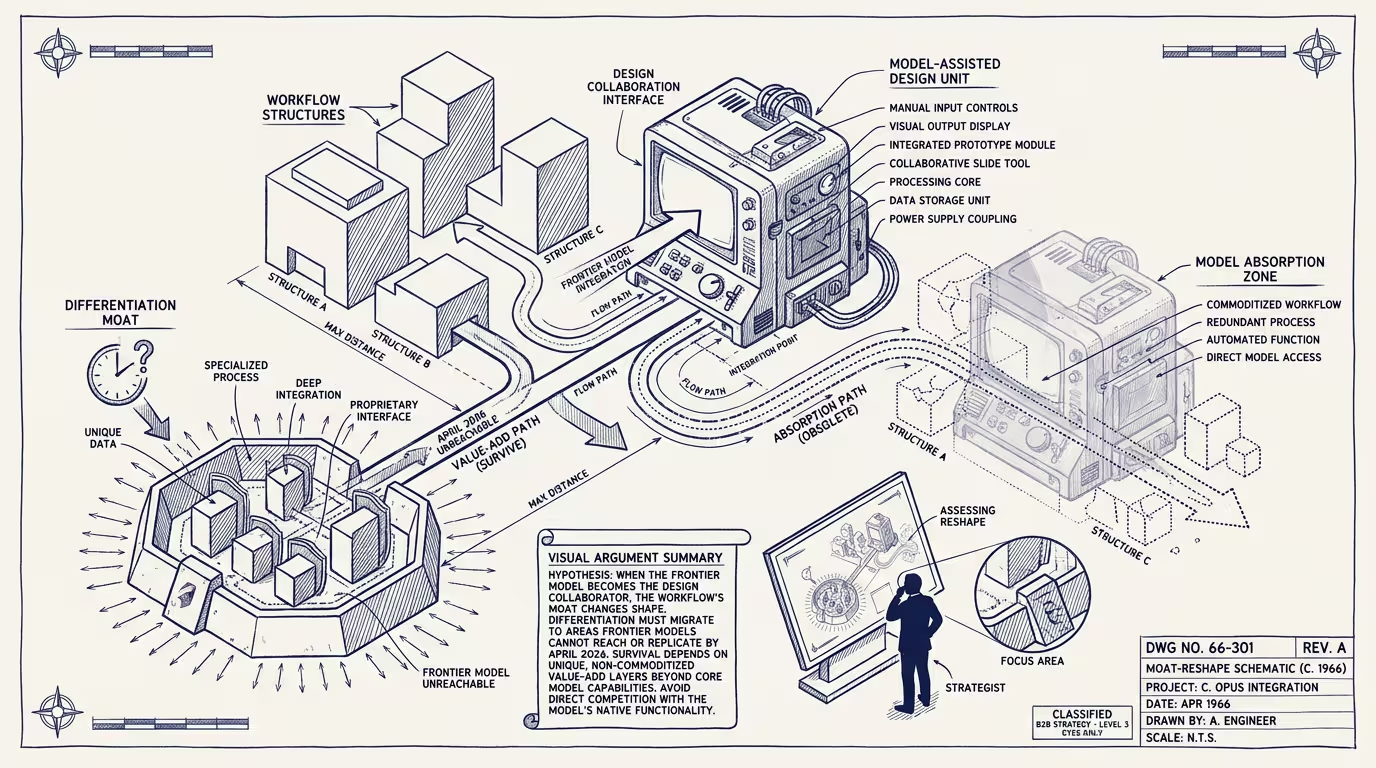
Anthropic shipped Claude Opus 4.7 on April 17, 2026, with Claude Design as a packaged feature. Claude Design is a collaborative design tool for visual outputs, prototypes, and slides — the model produces visual artifacts the user can iterate on inside the same interaction loop. The trade press read it as a feature release. The structural read is that the moat question for every B2B SaaS workflow that touches design just got reshaped.
The argument that holds is that when the frontier model becomes the design collaborator, the workflow that was sold-as-software becomes the workflow-on-top-of-the-model. The split is binary, and the cleavage runs through every B2B-design category at once.
The category that survives is the one whose value-capture depends on something the model does not natively do. Regulated-deliverable design (architectural plans, medical imaging, regulatory-filing visualization, financial-disclosure infographics) survives because the model produces the visual output but the workflow has to produce the regulator-acceptable artifact, with provenance metadata and audit chains the model does not generate. Enterprise-integration design (slides keyed to brand systems, prototypes rendered in design-system tokens, executive dashboards feeding live company data through visual templates) survives because the integration work is operator-class work the model does not perform — the model commoditizes the design-interaction, the workflow keeps the integration value. Workflow-bundled design (design as one step inside a campaign-launch workflow with audience research, creative brief, design, A/B testing, deployment, and attribution analysis) survives because the bundle is the moat and the design step is one slot the operator already owns.
The category that compresses is the one whose value the model ships native. Standalone design-iteration tools — Figma's core iteration loop, the Adobe Express variant, Canva's basic-tier content-creation loop — sold the iteration interaction itself, and the model now ships that interaction at marginal cost. The standalone-tool category absorbs price compression directly. Design-asset-templating businesses (template marketplaces, stock-design libraries, presentation-template subscription services) compress because the model produces templates on demand, and the marketplace-as-distribution-layer survives only where curation or licensing carries durable value. Design-time consultancies that bill hourly for visual artifacts compress because the artifact production has gone fractional-cost; consultancies that have not pivoted from artifact-production to brand-strategy-and-audience-positioning judgment absorb the compression.
The thing that crosses pillars is that the model-becomes-substrate pattern recurs across categories beyond design. The model becoming the writing collaborator (Opus 4.5+ writing capabilities) compressed the same set of workflow categories in writing. The model becoming the research collaborator (Opus 4.6+ deep research) compressed the same set in research. Each category has its own survives-vs-compresses split with the same load-bearing test: does the workflow capture operator-relevant value beyond the model-substrate interaction? If yes, the workflow survives. If no, the operator has to pivot or accept the compression. The discipline is, in operating practice, the moat-analysis the model-substrate transition forces every B2B operator to run.
The read that survives is that Opus 4.7 with Claude Design is one event in a longer arc of frontier-model-becomes-substrate releases, the moat-reshaping happens at every release in the arc, and the operator-grade who ran the analysis in 2025 and pivoted is the operator positioned for the 2026-2027 substrate shift. The operators who did not are absorbing the compression at the rate the model substrate ships.
Opus 4.7 ships with design. The B2B moat just got reshaped. Operators in the survival categories are operating-coherent. Operators in the compressed categories have ninety days to pivot before the next point release reshapes the moat again.
—TJ