Spirit filed Chapter 11 again. The bailout-as-life-support thesis now has two receipts.
TL;DR [show]
Spirit Airlines filed for Chapter 11 protection a second time in August 2025, within months of emerging from the November 2024 filing. The second filing confirms the Q4 2024 structural-fragility read on the ULCC model: government support and bankruptcy restructuring extended the agony of an operating model that was not solvent at cruise speed. Two receipts in eight months is enough to file the structural pattern as confirmed rather than tentative. Short commentary on what the second filing shows and what it implies for the remaining ULCCs.
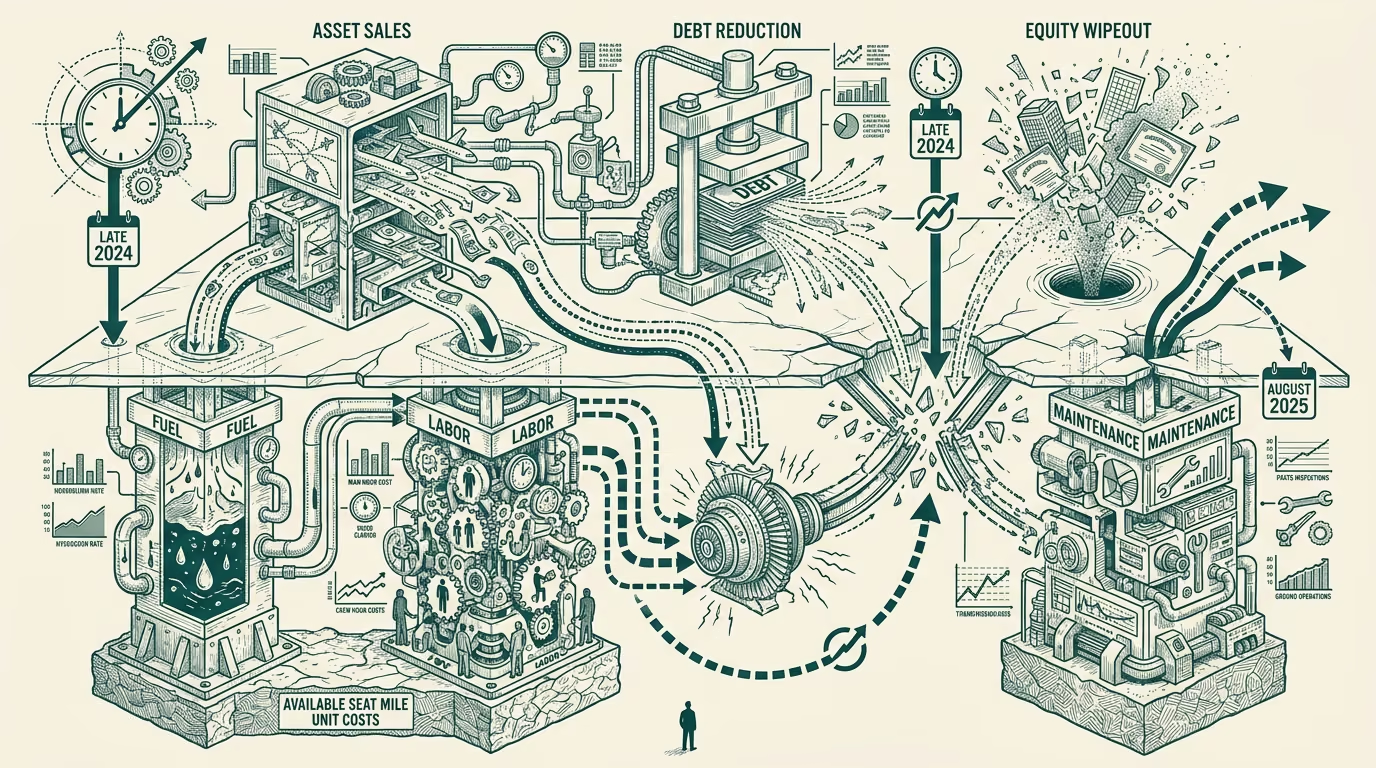
Spirit Airlines filed for Chapter 11 protection a second time in August 2025, within months of emerging from its first Chapter 11 filing in late 2024. The second filing closes the question that the first filing had left tentatively open: whether the post-bankruptcy restructuring of the carrier's balance sheet would produce an operating model that was sustainable at cruise speed. The answer, on the visible 2025 evidence, is that it did not.
This commentary builds on the structural-fragility read offered after the first filing. The structural-fragility read held that the ULCC operating model in its 2010-2024 form depended on perpetual-growth load factors, bailout-extended runway, and fare-race economics that the underlying unit costs did not support. The first Chapter 11 was the consequence of those structural assumptions reaching their joint failure point. The second Chapter 11 is the confirmation that the post-bankruptcy operating model, with the balance-sheet restructured but the underlying unit-economics unchanged, runs into the same structural failure point on a faster timeline.
Two receipts in eight months is enough to move the structural-fragility framing from tentative to confirmed. The pattern is the pattern. The carrier's specific balance-sheet engineering through the first restructuring did not address the unit-economics structural problem that drove the carrier into Chapter 11 in the first place. The second filing surfaces the same structural problem on a compressed timeline, with creditor recovery values that are likely to be substantially worse than the first filing's, and with a public commentary that has shifted from cautious-but-hopeful to structurally-pessimistic.
The implication for the remaining U.S. ULCCs is unflattering. Frontier, Allegiant, Sun Country in its specialty configuration, Avelo and Breeze in their smaller shapes, are operating against the same structural-fragility profile that produced the Spirit trajectory. The post-Spirit-second-filing read on the category is that the trajectory is structural rather than carrier-specific, and the remaining carriers are running on borrowed time from the same set of assumptions Spirit ran on. The variance in their landing dates is substantial; the variance in their structural exposure is not.
For investors evaluating ULCC equity and corporate debt through the second half of 2025 and into 2026, the operator-class read is that the structural-fragility scenario is the central scenario rather than the tail scenario. Pricing the remaining ULCCs against the Spirit trajectory, with appropriate variance for carrier-specific positioning, produces meaningfully different valuations from the trade-press resilience-and-recovery framing that has continued to circulate.
For the policy class evaluating bailout and support mechanisms, the read is that government support extended the Spirit operating model past the point where the structural-fragility scenario was already visible. The support did not produce sustainable operating economics; it produced extended runway that delayed but did not prevent the structural failure. The lesson for the next cycle, when other ULCCs reach their failure points, is to not repeat the bailout pattern in a way that defers structural failure without addressing the underlying operating-model problem.
The Spirit second-filing is the cleanest confirmation the U.S. ULCC category has produced of the structural-fragility framing. The first filing left the question open. The second filing closes it. The remaining carriers in the category are running the same shape on different timelines. The trade-press resilience story will continue. The durable read is now confirmed. Operators reading the data are positioning accordingly, and the operators not reading it will continue to absorb the consequence of the structural pattern they have not yet acknowledged.
Two receipts. Pattern confirmed. Next.
—TJ